Communication & Development
Supporting Communication in Autistic Children
By Puzzle Peace Community Team · · 2 min read
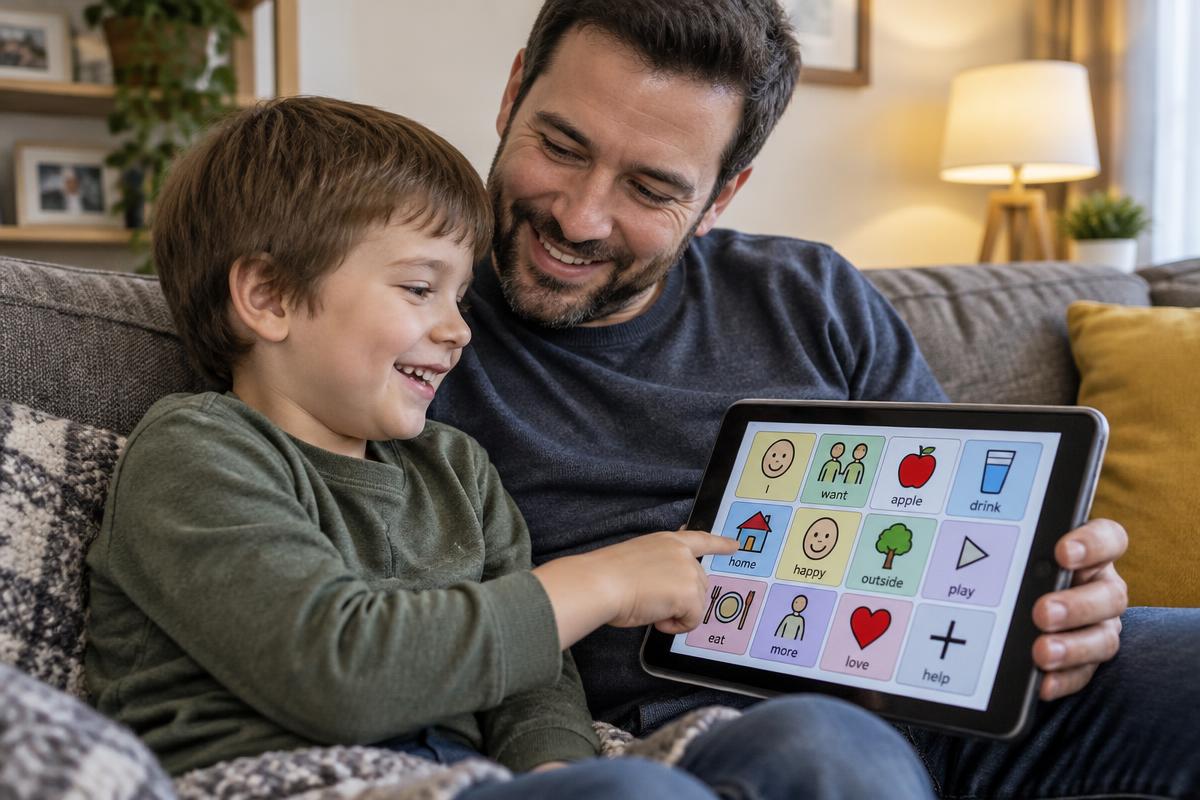
Some autistic children speak fluently, some use few words, and some don't use speech at all. Every child communicates — our job is to listen in all the ways they share.
Many ways to communicate
- Spoken words and repeated phrases (echolalia), which often carry meaning
- Gestures, facial expressions, and body language
- Pictures, sign language, and writing
- Augmentative and alternative communication (AAC) devices and apps
AAC supports speech
According to the American Speech-Language-Hearing Association (ASHA), using AAC does not stop a child from learning to talk. It gives children a reliable way to express themselves right now.
Simple everyday strategies
- Use short, clear sentences and give extra time to respond
- Follow your child's lead and join their interests
- Model words and symbols without pressure to repeat
- Celebrate every attempt to communicate
Professional support
A speech-language pathologist can assess your child's communication and suggest approaches that fit your family.
Sources
This article is for general education and does not replace professional medical advice. Reviewed October 2026.
Related articles
Communication & Development
Early Signs of Autism in Young Children
What developmental differences can look like in the early years, and when to talk to a professional.
October 28, 2026 · 2 min read

Understanding Autism
Understanding Autism: A Parent's Guide
A calm, clear starting point for families who are new to autism or simply want to understand it better.
October 28, 2026 · 2 min read

Strengths & Celebrations
Celebrating the Unique Strengths of Autistic Children
Every child has gifts worth noticing. Here's how to recognize and nurture them — without stereotypes.
October 28, 2026 · 2 min read